Machine handling best practices is a topic more manufacturers are researching as they look to modernize operations, and this guide breaks down exactly what it involves and how to approach it in practice.
Proper machine handling is one of those topics every plant covers during induction training, yet lapses in day-to-day practice are still one of the most common causes of both quality issues and equipment damage. Good machine handling habits are simple in principle but easy to let slip under production pressure.
Core Machine Handling Practices
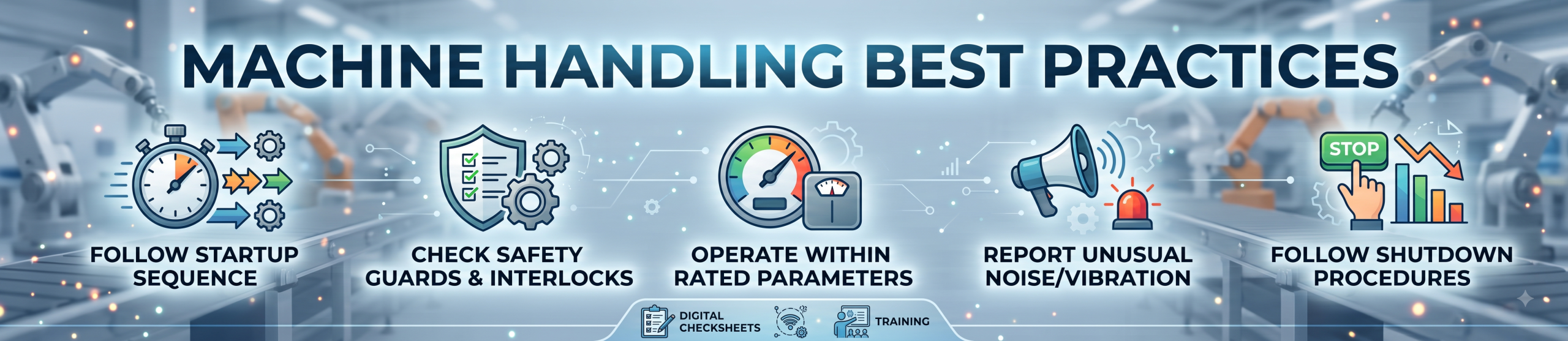
- Following the correct startup sequence every time, rather than skipping steps to save a few minutes
- Checking that safety guards and interlocks are in place and functional before running the machine
- Operating within the machine’s rated speed and load parameters rather than pushing beyond specification to hit output targets
- Reporting unusual noise, vibration, or temperature immediately rather than continuing to run and hoping it resolves itself
- Following proper shutdown procedures at the end of a shift, not just stopping the machine abruptly
Why Good Habits Slip Under Pressure
When production targets are tight, operators sometimes skip a startup check or continue running a machine showing early warning signs because stopping feels like it will make the deadline worse. In reality, a machine handling shortcut that causes a breakdown or quality issue almost always costs more time than the shortcut saved, but this trade-off is easy to lose sight of in the moment.
How Digital Checksheets Reinforce Good Practice
A digital startup or shutdown checksheet, tied to the specific machine an operator is running, makes it harder to skip a step without it being visibly incomplete. Unlike a paper form that can simply be left blank or filled in later from memory, a digital checksheet can require each step to be confirmed in sequence before the machine is logged as ready for production.
Connecting Handling Data to Maintenance
When operators report unusual machine behavior through a digital system rather than a verbal mention to a supervisor, that report becomes a permanent, timestamped record. Over time, this creates a much clearer picture of which machines are showing early warning signs repeatedly, feeding directly into predictive maintenance decisions rather than relying on operator memory of what was mentioned weeks ago.
Training That Sticks
Machine handling training works best when reinforced through the same systems operators use daily, not just covered once during induction. Skill matrix tracking that flags when a certification needs refreshing, combined with digital checksheets that structure the actual handling process, keeps good practice consistent rather than depending purely on individual habit.
Machine Handling Best Practices: Key Takeaways
Getting machine handling best practices right is less about chasing the latest trend and more about building a habit of measuring before you change anything. Teams that succeed usually start with a single, well-defined process, track it consistently, and only then expand what they’ve learned to the rest of the plant. That disciplined, incremental approach to machine handling best practices tends to outperform a single big-bang rollout, because each step is validated with real data before the next one begins.
If you’re evaluating machine handling best practices for your own operation, it helps to talk with a team that has actually implemented it elsewhere, not just read about it. LeMeniz Infotech has supported manufacturers and engineering students with practical, hands-on guidance since 2011, and we’re happy to walk through real examples of machine handling best practices in practice before you commit to anything.
For broader context on manufacturing modernization standards, see the NIST manufacturing resource center. To see how machine handling best practices fits into a complete digital factory rollout, explore our Digital Factory suite from LeMeniz Infotech.
Teams rolling out machine handling best practices for the first time often underestimate how much of the early value comes from simply having consistent, accurate data to look at, rather than from any single advanced feature. Getting the basics right and building the habit of reviewing that data regularly tends to matter more in the first few months than choosing the most sophisticated available option.