Factory safety automation is a topic more manufacturers are researching as they look to modernize operations, and this guide breaks down exactly what it involves and how to approach it in practice.
Factory safety has traditionally relied on paper logs, laminated checklists, and periodic walk-throughs by a safety officer. This approach worked when plants were smaller and simpler, but modern manufacturing environments with dozens of machines, multiple shifts, and constantly changing work orders have outgrown it. Safety automation replaces scattered paper records with a connected system that tracks incidents, near-misses, permits, and compliance checks in one place, in real time.
The Problem With Manual Safety Management
When safety records live on paper, three things typically go wrong. First, near-misses often go unreported because filling out a form feels like extra work after a shift. Second, safety officers only see a snapshot of conditions during their scheduled rounds, missing whatever happens between visits. Third, when an audit or incident investigation happens, tracking down the right paper records across multiple shifts and departments can take days.
What an Automated Safety System Changes
A factory safety management application digitizes the entire safety workflow, from permit-to-work approvals to incident reporting, so that:
- Any worker can report a hazard or near-miss from a phone or shop-floor terminal in seconds
- Supervisors get instant alerts for high-risk conditions instead of finding out at the next walk-through
- Every safety event is timestamped and searchable, making audits and investigations far faster
- Repeat issues on the same machine or area become visible as patterns instead of isolated incidents
Connecting Safety to the Rest of the Plant
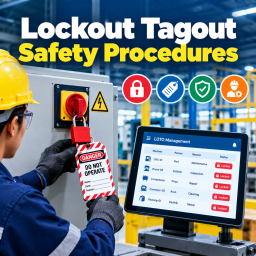
Safety data becomes far more useful when it is not siloed. For example, a work permit system tied into machine management can automatically block a machine from being started while a permit is still open for maintenance work on it. Similarly, lockout-tagout records connected to the same platform as production scheduling prevent a supervisor from accidentally assigning a job to equipment that is under a safety hold. This kind of connection between safety and operations is one of the biggest advantages of moving away from paper-based systems.
The Compliance Angle
Regulatory audits are far less stressful when every safety record, permit, and training log already exists in a searchable digital system rather than a filing cabinet. Instead of a scramble to locate documents when an auditor arrives, safety teams can pull a complete, time-stamped history for any machine, work area, or employee within minutes. For plants operating under ISO or other compliance frameworks, this alone often justifies the move to automated safety management.
Factory Safety Automation: Key Takeaways
Getting factory safety automation right is less about chasing the latest trend and more about building a habit of measuring before you change anything. Teams that succeed usually start with a single, well-defined process, track it consistently, and only then expand what they’ve learned to the rest of the plant. That disciplined, incremental approach to factory safety automation tends to outperform a single big-bang rollout, because each step is validated with real data before the next one begins.
If you’re evaluating factory safety automation for your own operation, it helps to talk with a team that has actually implemented it elsewhere, not just read about it. LeMeniz Infotech has supported manufacturers and engineering students with practical, hands-on guidance since 2011, and we’re happy to walk through real examples of factory safety automation in practice before you commit to anything.
For broader context on manufacturing modernization standards, see the NIST manufacturing resource center. To see how factory safety automation fits into a complete digital factory rollout, explore our Digital Factory suite from LeMeniz Infotech.
Teams rolling out factory safety automation for the first time often underestimate how much of the early value comes from simply having consistent, accurate data to look at, rather than from any single advanced feature. Getting the basics right and building the habit of reviewing that data regularly tends to matter more in the first few months than choosing the most sophisticated available option.
Manufacturers who get the most value from factory safety automation tend to treat it as an ongoing practice rather than a one-time project, revisiting their approach every few months as conditions on the floor change and new data becomes available to act on.
A Quick Checklist for Factory Safety Automation
Before rolling this out plant-wide, it helps to confirm three things: that the team responsible for factory safety automation has clear ownership of the data, that there’s a simple way to review results on a fixed schedule, and that early wins get shared back with the floor so momentum doesn’t stall after the first few weeks.