Master production scheduling is a topic more manufacturers are researching as they look to modernize operations, and this guide breaks down exactly what it involves and how to approach it in practice.
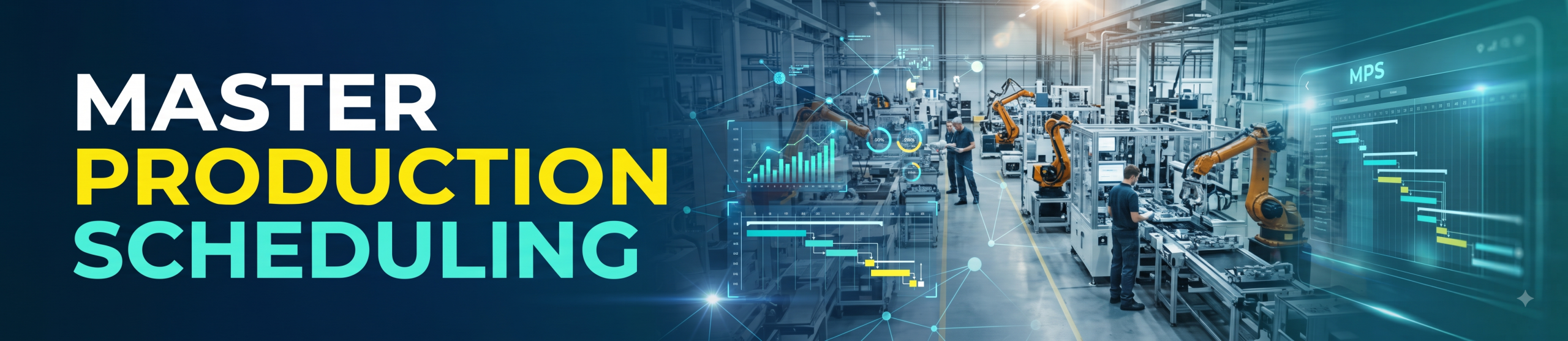
Master Production Scheduling, often abbreviated as MPS, sits at a slightly higher level than the day-to-day scheduling most people picture when they think about production planning. Rather than deciding which machine runs which job this afternoon, MPS determines what quantities of finished products need to be produced over a longer horizon, typically weeks to months, based on sales forecasts and confirmed orders.
How MPS Differs From Detailed Scheduling
Detailed production scheduling deals with the specifics: which machine, which shift, which sequence of jobs today. Master production scheduling operates one level up, setting the overall production quantities and timing that detailed scheduling then has to fit within. Think of MPS as the plan, and detailed scheduling as the execution of that plan on a daily basis.
The Inputs That Drive an MPS
- Sales forecasts and confirmed customer orders
- Current finished goods inventory levels
- Overall plant capacity constraints across all product lines
- Raw material and component lead times that affect how quickly production can respond to demand changes
Why a Good MPS Matters
Without a solid master schedule, detailed daily scheduling ends up reacting constantly to shifting priorities rather than executing a coherent plan. This typically shows up as frequent rush changeovers, inconsistent on-time delivery, and inventory that’s simultaneously too high in some products and too low in others.
Keeping the MPS Realistic
A master schedule is only useful if it reflects genuine plant capacity rather than optimistic assumptions. Manufacturers that base their MPS on real historical output data, rather than theoretical maximum capacity, generally produce more reliable schedules that detailed daily scheduling can actually execute against without constant firefighting.
Connecting MPS to the Rest of the Digital Factory
When master scheduling data connects directly to inventory, sales, and detailed production scheduling systems, changes in demand forecast or confirmed orders flow through automatically, rather than requiring someone to manually update multiple separate spreadsheets every time a forecast changes. This keeps the entire planning chain, from long-range forecast down to today’s machine assignments, working from the same current information.
Master Production Scheduling: Key Takeaways
Getting master production scheduling right is less about chasing the latest trend and more about building a habit of measuring before you change anything. Teams that succeed usually start with a single, well-defined process, track it consistently, and only then expand what they’ve learned to the rest of the plant. That disciplined, incremental approach to master production scheduling tends to outperform a single big-bang rollout, because each step is validated with real data before the next one begins.
If you’re evaluating master production scheduling for your own operation, it helps to talk with a team that has actually implemented it elsewhere, not just read about it. LeMeniz Infotech has supported manufacturers and engineering students with practical, hands-on guidance since 2011, and we’re happy to walk through real examples of master production scheduling in practice before you commit to anything.
For broader context on manufacturing modernization standards, see the NIST manufacturing resource center. To see how master production scheduling fits into a complete digital factory rollout, explore our Digital Factory suite from LeMeniz Infotech.
Teams rolling out master production scheduling for the first time often underestimate how much of the early value comes from simply having consistent, accurate data to look at, rather than from any single advanced feature. Getting the basics right and building the habit of reviewing that data regularly tends to matter more in the first few months than choosing the most sophisticated available option.
Manufacturers who get the most value from warehouse layout optimization tend to treat it as an ongoing practice rather than a one-time project, revisiting their approach every few months as conditions on the floor change and new data becomes available to act on.
A Quick Checklist for Warehouse Layout Optimization
Before rolling this out plant-wide, it helps to confirm three things: that the team responsible for warehouse layout optimization has clear ownership of the data, that there’s a simple way to review results on a fixed schedule, and that early wins get shared back with the floor so momentum doesn’t stall after the first few weeks.