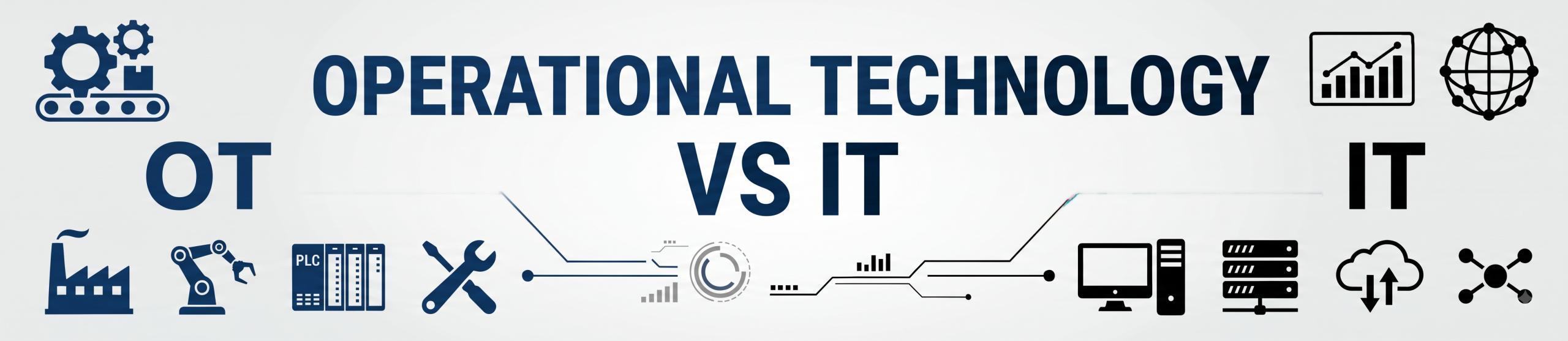
Operational technology vs it is a topic more manufacturers are researching as they look to modernize operations, and this guide breaks down exactly what it involves and how to approach it in practice.
As factories become more connected, the line between Operational Technology and Information Technology gets discussed constantly, but the two serve genuinely different purposes and come with different priorities. Understanding this difference matters for any manufacturer building out a digital factory strategy.
What OT Actually Means
Operational Technology refers to the hardware and software that directly monitors or controls physical equipment and processes: PLCs, SCADA systems, machine controllers, and sensors on the shop floor. OT systems exist to keep production running safely and reliably, often for years or decades without major changes, because stability matters more than having the latest software version.
What IT Covers
Information Technology covers the systems that manage data, communication, and business processes: email, ERP systems, office networks, and cloud applications. IT environments are built to change frequently, with regular updates, patches, and new tools, because staying current is generally seen as reducing risk rather than introducing it.
Why the Priorities Clash
This difference in philosophy creates real friction. An IT team’s instinct to patch and update systems regularly can be risky when applied to an OT system controlling a live production line, where an unplanned reboot could halt production or, in some safety-critical cases, create a hazard. Meanwhile, OT systems that go years without updates can accumulate security vulnerabilities that an IT-minded security team would normally address immediately.
Where Digital Factory Platforms Fit In
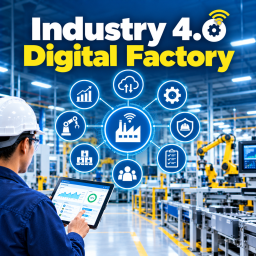
A digital factory platform typically sits at the boundary between OT and IT, pulling data from OT systems, like machine status and sensor readings, into a format that can be used by IT-side applications, such as production dashboards, quality reporting, and inventory systems. Getting this boundary right is one of the more technical challenges in building a connected factory, since it requires respecting OT’s need for stability while still delivering the real-time data IT-side applications depend on.
Practical Advice for Manufacturers
Manufacturers building a digital factory strategy benefit from treating OT and IT integration as a deliberate project rather than an afterthought. This usually means involving both operations and IT teams early, choosing platforms designed specifically to bridge OT and IT safely, and being cautious about any system that requires direct, unmanaged changes to production-critical OT equipment.
Operational Technology Vs It: Key Takeaways
Getting operational technology vs it right is less about chasing the latest trend and more about building a habit of measuring before you change anything. Teams that succeed usually start with a single, well-defined process, track it consistently, and only then expand what they’ve learned to the rest of the plant. That disciplined, incremental approach to operational technology vs it tends to outperform a single big-bang rollout, because each step is validated with real data before the next one begins.
If you’re evaluating operational technology vs it for your own operation, it helps to talk with a team that has actually implemented it elsewhere, not just read about it. LeMeniz Infotech has supported manufacturers and engineering students with practical, hands-on guidance since 2011, and we’re happy to walk through real examples of operational technology vs it in practice before you commit to anything.
For broader context on manufacturing modernization standards, see the NIST manufacturing resource center. To see how operational technology vs it fits into a complete digital factory rollout, explore our Digital Factory suite from LeMeniz Infotech.
Teams rolling out operational technology vs it for the first time often underestimate how much of the early value comes from simply having consistent, accurate data to look at, rather than from any single advanced feature. Getting the basics right and building the habit of reviewing that data regularly tends to matter more in the first few months than choosing the most sophisticated available option.