Careers in Industrial Automation and IoT: Opportunities and Skills for the Future
As manufacturing plants increasingly adopt digital factory platforms, sensors, and connected systems, careers industrial automation and IoT are creating new opportunities for students and early-career professionals. Demand has grown for people who understand both the industrial side of manufacturing and the software and data skills needed to support automation.
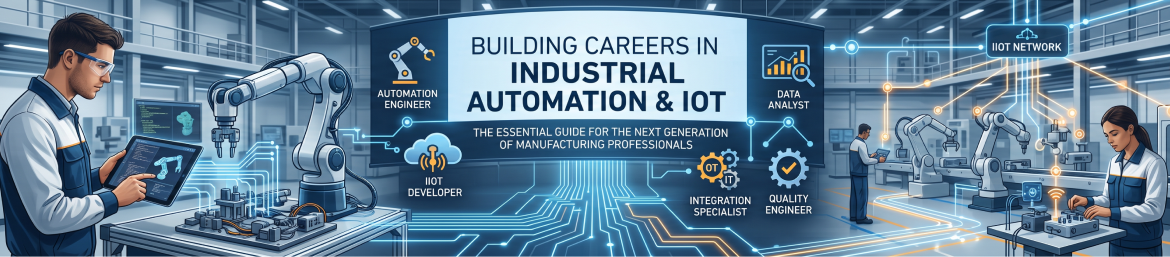
The growth of connected manufacturing has created a wide range of career paths for engineering and technology professionals. From automation engineering and Industrial IoT development to manufacturing data analysis and OT/IT integration, careers industrial automation and IoT offer opportunities across multiple areas of modern industry.
Types of Careers in Industrial Automation and IoT
Automation Engineers
Automation engineers design and maintain systems that connect machines, sensors, controllers, and software platforms. They play an important role in improving manufacturing efficiency and supporting automated production processes.
Industrial IoT Developers
Industrial IoT developers build software and connected systems that collect, process, and analyze data from shop-floor sensors and industrial devices. Understanding Industrial IoT technologies is becoming increasingly valuable as factories adopt connected systems.
Data Analysts in Manufacturing
Manufacturing data analysts turn production, quality, maintenance, and operational data into actionable insights for plant managers. They help organizations identify trends, improve processes, and make better data-driven decisions.
OT/IT Integration Specialists
OT/IT integration specialists bridge operational technology systems used on the factory floor with enterprise software platforms. Their role is becoming increasingly important as manufacturers connect machines and production systems with digital business applications.
Quality and Process Engineers
Quality and process engineers use digital tools such as SPC monitoring and digital checksheet systems to manage and improve production quality. These roles increasingly require professionals to understand both traditional manufacturing processes and modern digital technologies.
Skills That Matter Most for Careers Industrial Automation and IoT
Success in careers industrial automation and IoT typically requires a combination of foundational engineering knowledge and modern technical skills.
Important skills include:
- Mechanical, electrical, or industrial engineering fundamentals
- PLC and industrial automation knowledge
- Sensor and IoT technologies
- Industrial communication protocols
- Software and programming concepts
- Data analysis and visualization
- Manufacturing process knowledge
- Cloud and connected systems
- Machine learning and predictive analytics
- Problem-solving and systems thinking
Practical exposure to real industrial systems, not just theoretical coursework, makes a significant difference to employability. As manufacturing becomes more connected, professionals who understand both physical industrial processes and digital technologies will have a stronger advantage.
Why Careers Industrial Automation and IoT Are Growing
As manufacturers move away from paper-based operations toward connected digital factory systems, the demand for professionals who can implement, maintain, and analyze these technologies continues to rise.
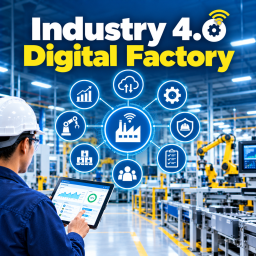
This transformation is closely connected to Industry 4.0, where automation, connected devices, data analytics, and intelligent systems are becoming increasingly important across manufacturing.
Careers industrial automation and IoT are no longer limited to a niche specialization. Digital skills are increasingly becoming a standard requirement across a large share of the manufacturing sector.
Companies need professionals who can understand machine data, integrate industrial systems, automate workflows, and support digital transformation initiatives.
How Students Can Prepare for Careers Industrial Automation and IoT
Students interested in careers industrial automation and IoT should go beyond classroom learning and focus on practical project experience.
Hands-on experience with automation systems, sensors, IoT devices, and industrial data collection provides a significant advantage. Working on final-year projects involving sensor integration, machine monitoring, industrial data analysis, or automation logic can provide concrete and demonstrable experience.
Students can also explore real-world digital solutions and software development projects offered by LeMeniz Technologies to understand how modern software, IoT, automation, and connected technologies are applied in practical business and industrial environments.
Building a portfolio of practical projects can often make a stronger impression during early-career hiring than theoretical knowledge alone.
A Field Worth Watching
Careers industrial automation and IoT sit at the intersection of traditional manufacturing and modern software. This combination makes the field one of the more resilient and growing career paths for engineering and technology students.
As Digital Factory technologies continue to evolve, professionals with a combination of engineering knowledge, automation skills, software understanding, IoT expertise, and data analysis capabilities will become increasingly valuable.
For students preparing for the future of manufacturing, developing practical skills in automation and connected technologies today can open opportunities across industries tomorrow.